





Identify the surface before choosing a cleaner
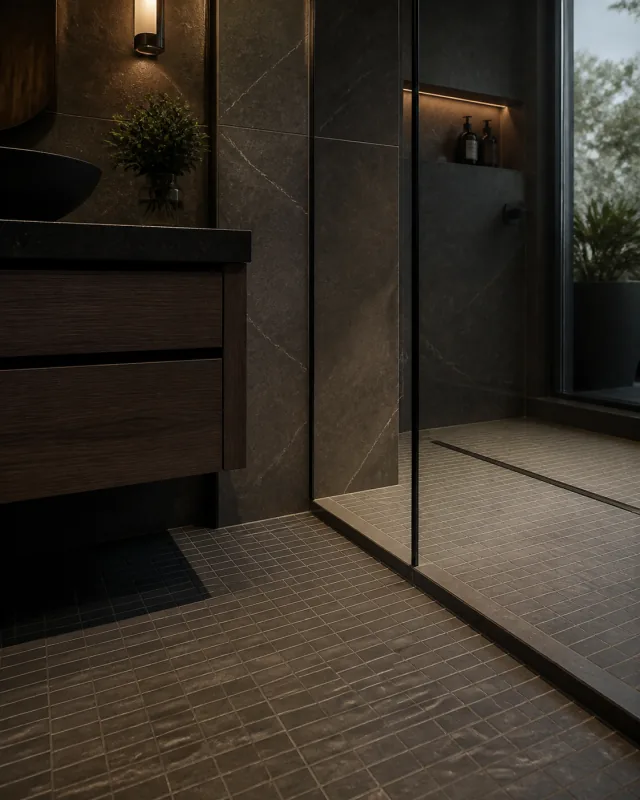
Keep the tile name, grout type, sealant and any sealer information with your renovation records. If you moved into a home without those records, do not assume a stone-look surface is porcelain or that every grout joint is the same material. A tile or stone supplier can help identify a product, although some surfaces may remain uncertain without documentation.
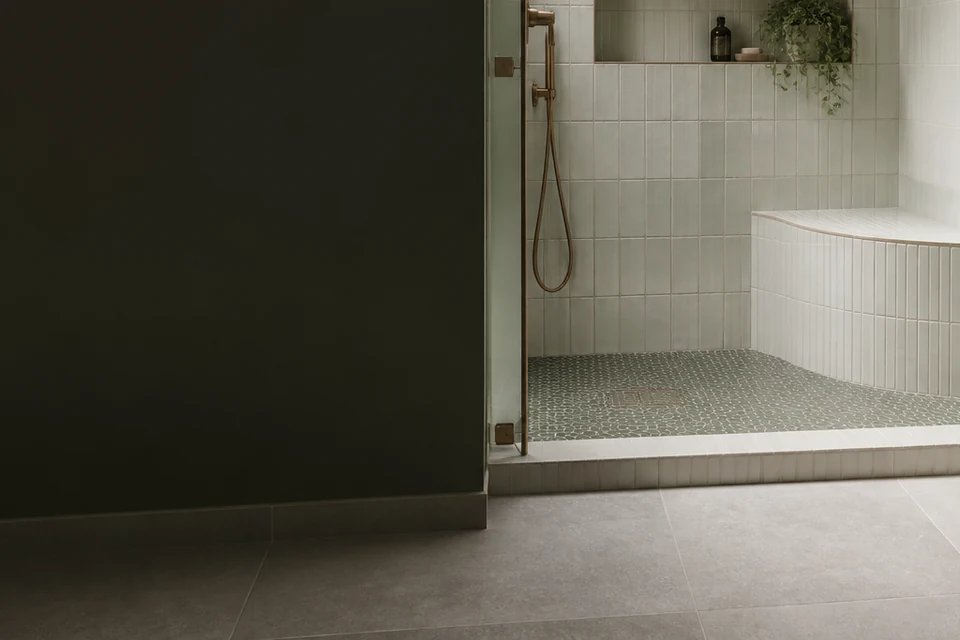
Follow the current care directions from each manufacturer. A cleaner that is acceptable for glazed ceramic may not suit natural stone, unglazed material, metal accents or some cement-based products. When directions differ, use the most restrictive guidance for the surfaces that the cleaner will touch.
Build a simple routine
Remove loose grit before wet cleaning because grit can scratch or dull some finishes when dragged across the surface. Use a soft broom, vacuum attachment suitable for hard floors or clean microfibre tool. Then use a compatible, properly diluted cleaner and clean water according to its label.
Avoid leaving dirty wash water to dry on the floor. Change the water as needed and rinse when the product instructions call for it. Drying some polished or glossy surfaces with a clean cloth can reduce streaks. More product is not necessarily better; residue can attract soil and change how the tile feels underfoot.
Treat spills without reaching for acid
Blot spills promptly rather than spreading them across the joint. Use the material manufacturer's recommended method for the substance involved. Strong acids, alkaline products, abrasives and solvents can alter surfaces, coatings, sealants or grout and should not be improvised as general cleaners.
Do not use vinegar or other acidic cleaners on natural stone. Acid can etch or dull acid-sensitive stone. Vinegar is also not a safe default for cementitious grout; repeated acid exposure can affect cement-based material. Choose a cleaner approved for the actual tile and grout, and spot test where any change will be less visible.
Clean grout according to its type
Grout joints collect soil differently from the tile face because they are recessed and may have a different texture. Begin with the approved neutral or purpose-made cleaner and a soft brush that will not damage nearby finishes. Aggressive wire brushes and abrasive pads can scratch tile, wear joints or mark profiles.
Not all grout needs the same sealer. Some cementitious products may use a compatible penetrating sealer, while other grout types have different requirements. Do not apply sealer simply because the joint is called grout. Check the product instructions, existing treatment and cure requirements first. Sealer can reduce absorption in suitable materials, but it does not make a surface maintenance-free or waterproof.
Give showers a chance to dry
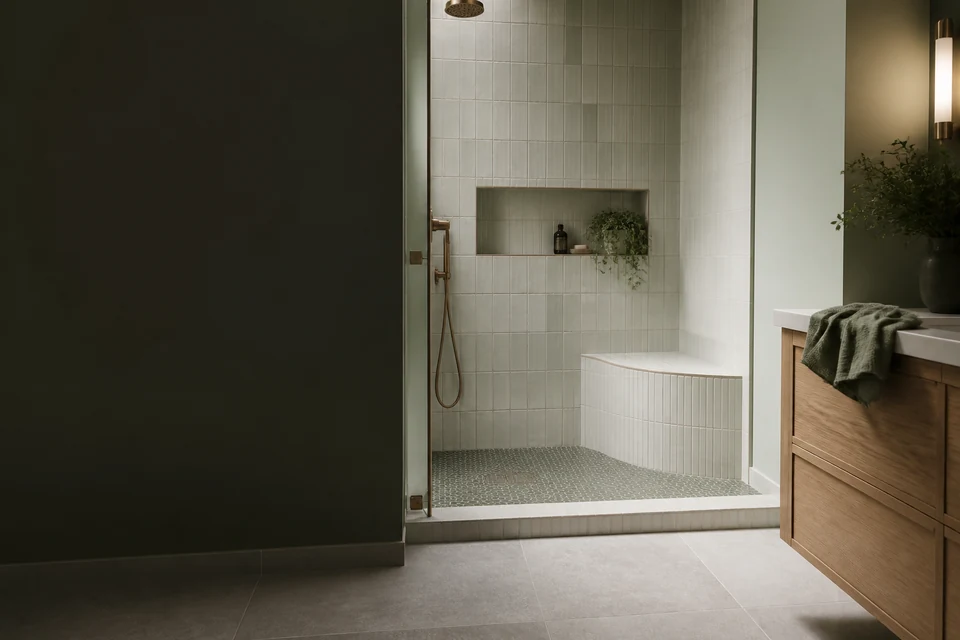
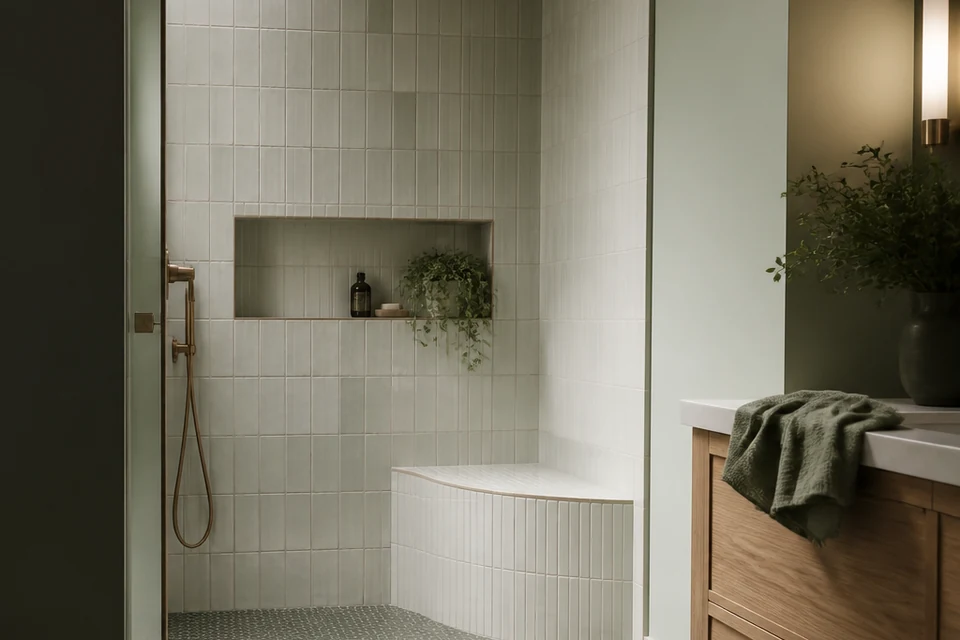
After use, remove standing water where practical and allow ventilation. A squeegee on glass and broad tile faces can reduce water deposits, provided it is kept clean and will not scratch the surface. Clean soap and body-product residue before it becomes a heavy film.
Persistent dampness, recurring staining, loose sealant or a change in how water drains should not be covered with stronger cleaner. Cleaning addresses the surface; it does not diagnose waterproofing, plumbing or ventilation. Plumbing leaks belong with an appropriate plumbing trade, while building or ventilation concerns may require other qualified help.
Protect floors from grit and movement
Use clean entry mats that will not trap moisture against a sensitive surface. Fit furniture with pads suited to its weight and leg shape, and replace them when grit becomes embedded. Lift furniture rather than dragging it. Check rolling chairs and casters for compatibility with the floor finish.
Avoid rubber-backed products or coatings unless the tile and finish manufacturer confirms they are suitable; some can mark or trap moisture. Heated floors should be operated according to the system instructions, especially after installation or seasonal shutdown.
Know when cleaning is not the answer
A cracked tile, repeated grout loss, loose piece, new hollow sound or moisture at an adjoining room may point beyond routine care. Record where and when the change appeared. Do not keep filling the same opening without considering movement or moisture below it.
If a product has discoloured, first rule out residue with its approved cleaning method. If the appearance remains, ask the manufacturer or supplier before experimenting. Keep labelled spare material and installation records so an isolated future replacement can be assessed against the original product.
Common questions
Questions related to this guide.
Can I clean natural stone with vinegar?
No. Vinegar is acidic and can etch or dull acid-sensitive stone. Use a cleaner approved by the stone or care-product manufacturer and spot test it first.
Is vinegar safe for grout?
Do not use it as a general grout cleaner. Acid is not a safe default for cementitious grout and may also affect nearby stone or finishes. Identify the grout and follow its manufacturer's care guidance.
Does grout sealer make a shower waterproof?
No. A compatible sealer may reduce absorption or staining in certain grout, but shower water management comes from the complete assembly below and behind the visible finish.
Should I use a steam cleaner on tile?
Only if the tile, grout, sealant and installation manufacturers allow it. Heat and moisture can affect some materials and adjoining finishes, so do not assume steam is universally suitable.