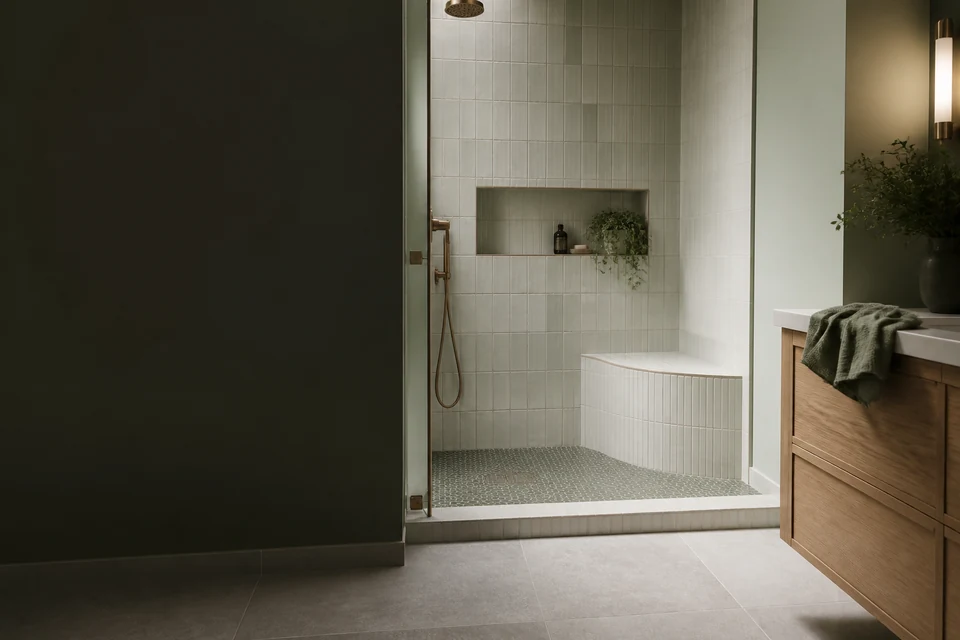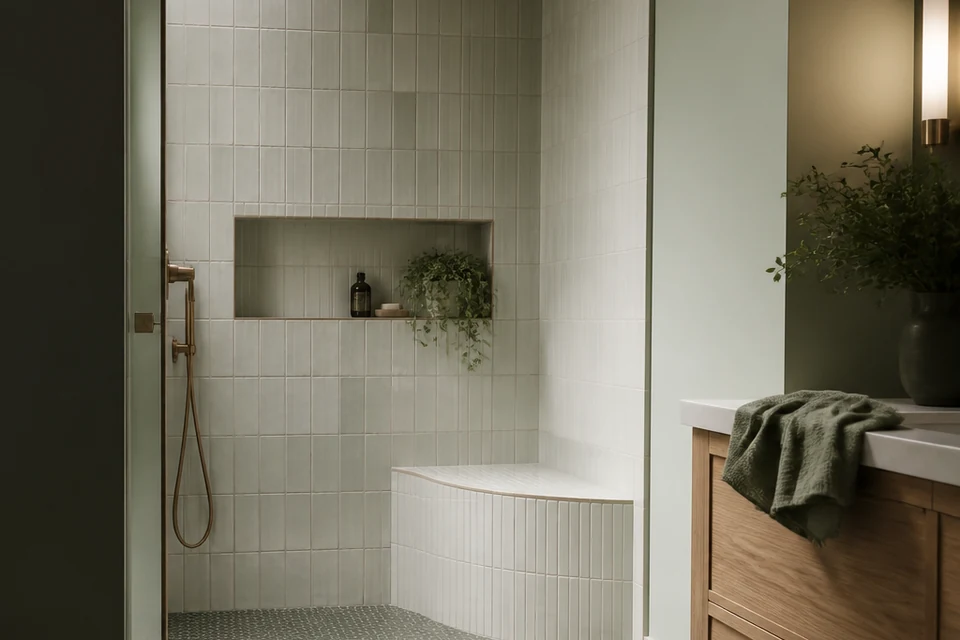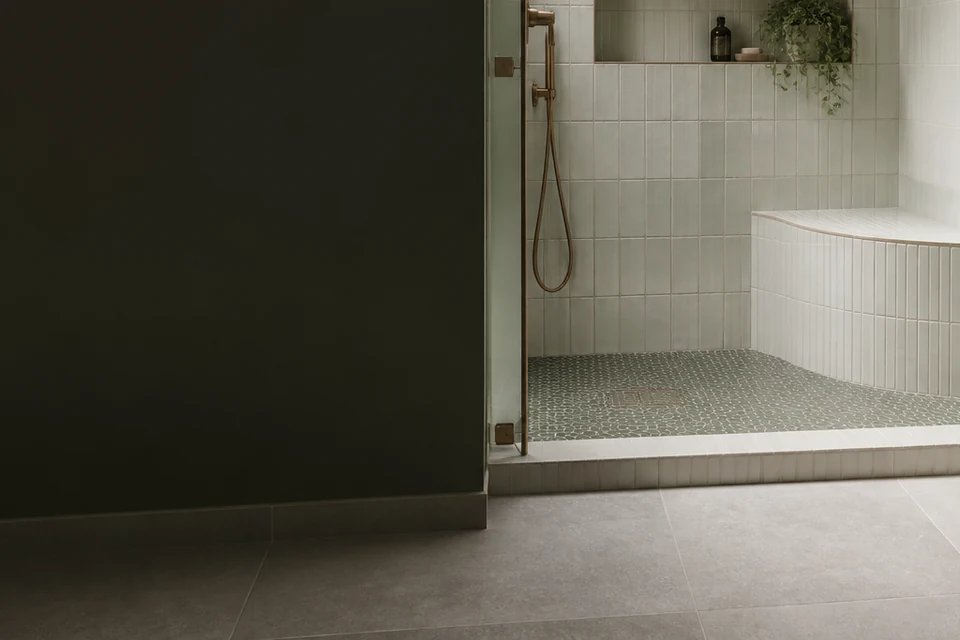
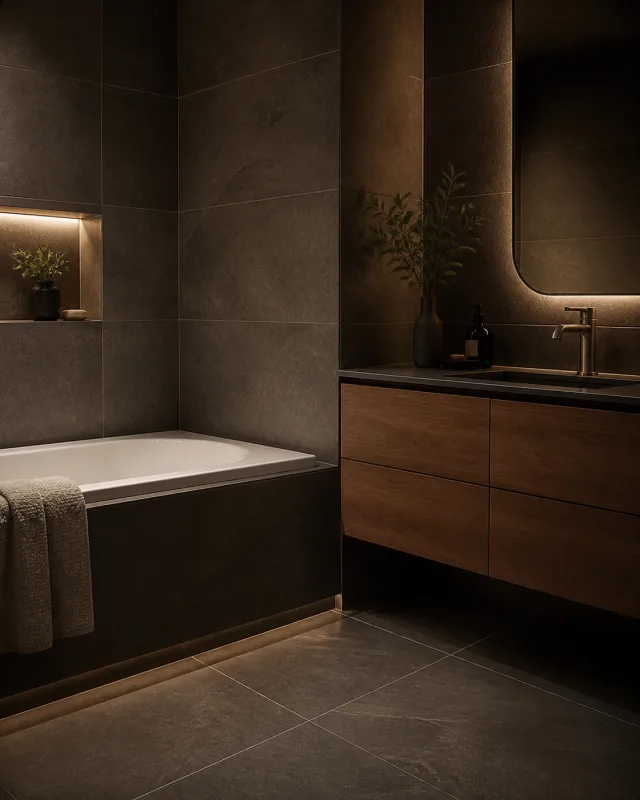
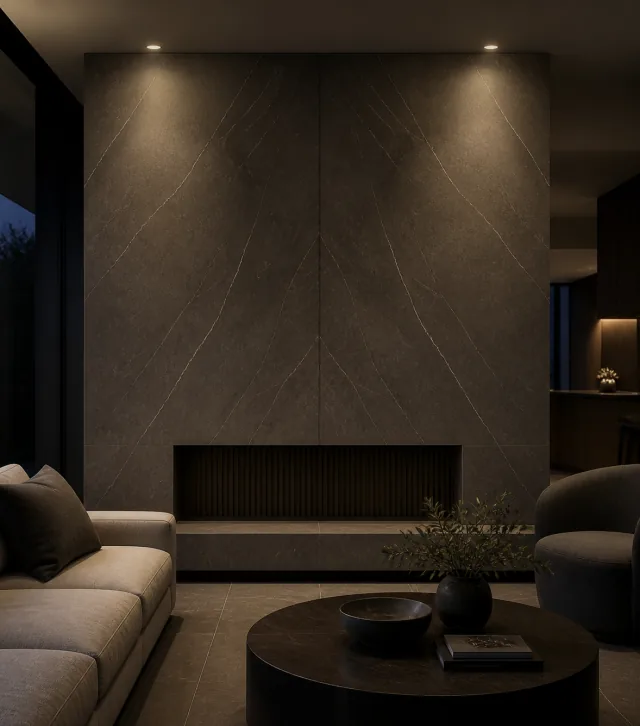
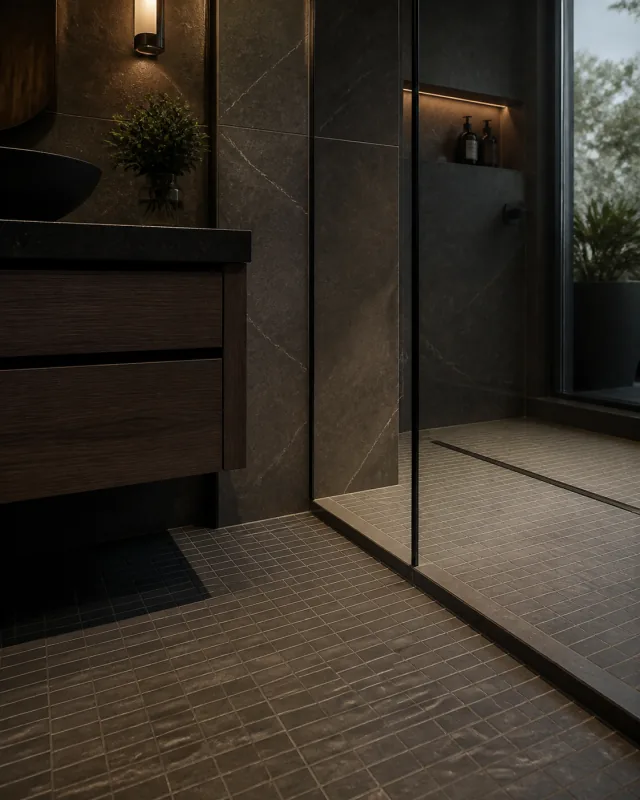
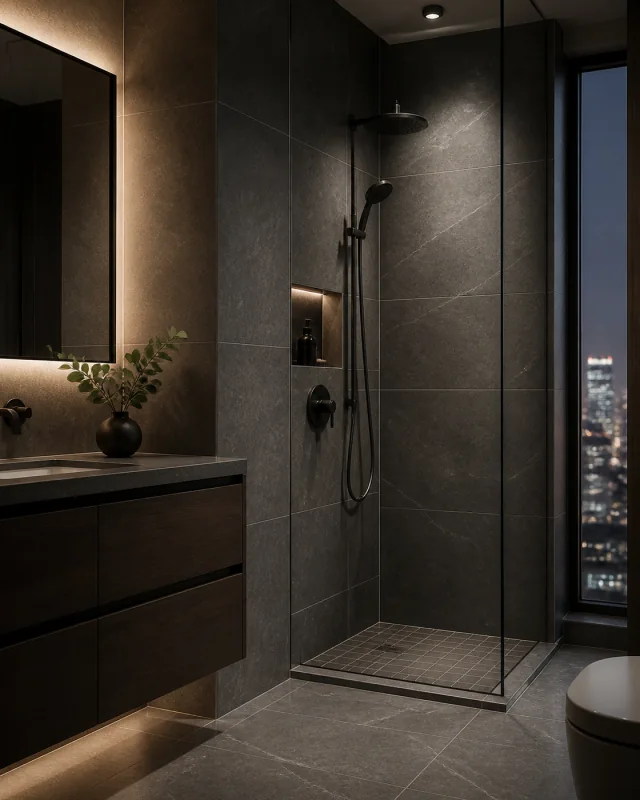
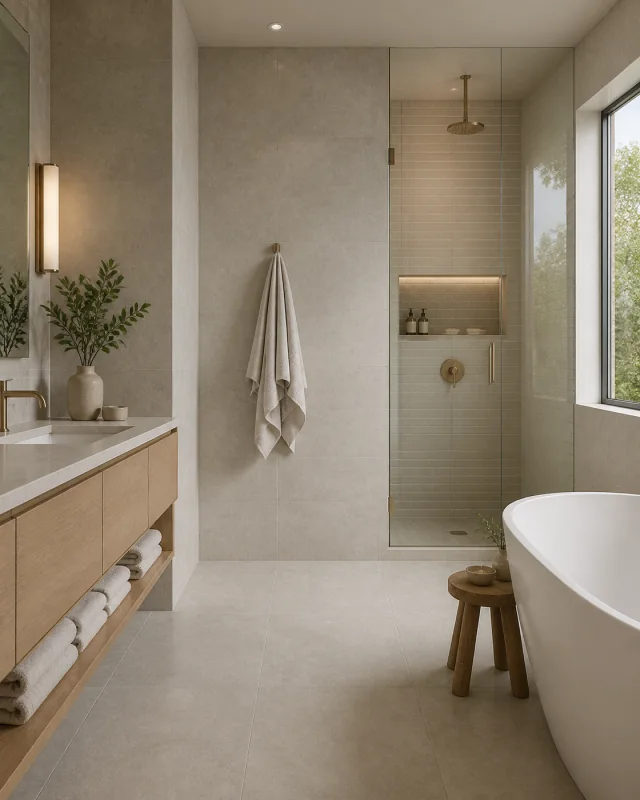
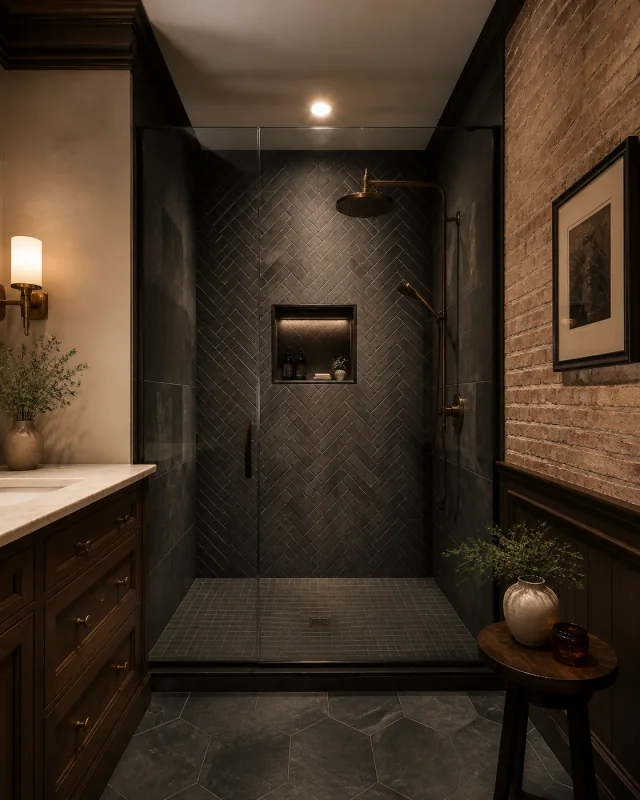
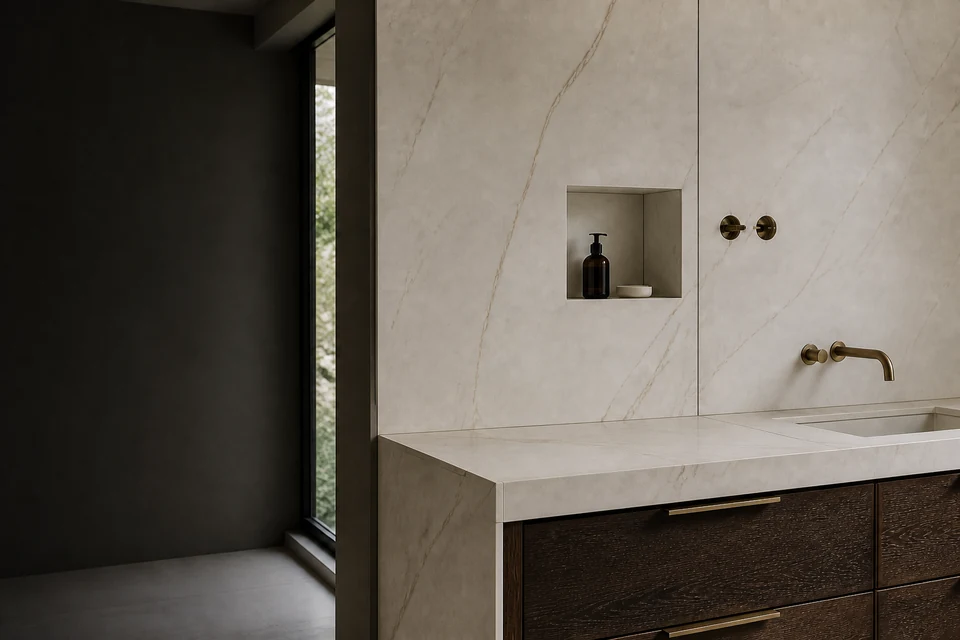
Choose for the surface and how it is used
Start by naming the exact surface: shower floor, shower wall, bathroom floor, entry, kitchen backsplash, fireplace surround or general living area. Products that look similar can have different intended uses. Check the manufacturer's current technical information for whether a tile is approved for floors, wet areas, exterior use or the temperature conditions near a fireplace.
For a floor, consider traffic, wet footwear, pets, furniture and how the room connects to adjacent finishes. For a wall, consider cleaning, outlets, corners and exposed edges. A shower adds slope, drainage and waterproofing details. Do not rely on a showroom label alone; keep the product name, size, finish, shade information and technical sheet with the project records.
Compare ceramic, porcelain and natural stone carefully
Ceramic tile is available in many wall and floor products, but suitability depends on the individual product rather than the category name. Porcelain is often selected for busy floors and wet rooms, yet finish and surface texture still matter. Natural stone has its own variation, sealing and cleaning needs, and some stone can react to acidic cleaners.
Ask to see several pieces or more than one box when variation is part of the design. A small sample may not show the full range of tone, veining or pattern repeats. If a printed porcelain imitates stone, compare multiple faces so the repeated imagery will not surprise you once it covers a larger surface.
Match size to the room and the base
Large-format tile can create a quieter field, but it does not make an uneven base disappear. The surface needs to be assessed for flatness, movement and overall condition before the layout is promised. Larger pieces also require a practical route into the room, suitable cutting space and enough clearance around stairs, elevators or tight turns.
Small tile can follow certain slopes and compact shapes more readily, but it creates more joints and may reveal inconsistent sheet spacing. In older GTA houses, floors can meet several materials at different heights. In condominiums, the assembly may also need to satisfy building rules for sound control, work hours, elevator booking and material movement. The property manager or condominium corporation sets those requirements; the tile selection should not be finalized in isolation from them.
Check slip, cleaning and grout as one decision
A glossy wall tile may be easy to wipe but unsuitable for a wet floor. A heavily textured floor tile may offer a surface you prefer underfoot yet take more effort to clean. Ask for the product's intended-use and slip information, then consider how the room will actually be used. No tile or rating removes the need for sensible wet-floor care.
Grout colour and joint size affect appearance and upkeep. Very light grout on a busy entry will show soil differently from a mid-tone grout. Strong contrast outlines every variation in joint width. Confirm the compatible grout and any movement-joint or sealant locations as part of the installation plan, not as a colour choice made at the last moment.
Resolve edges, quantities and availability before ordering
Find out how the tile will finish at outside corners, wall ends, niches, thresholds and transitions. Some tile lines have matching trim; others need a metal profile, stone edge or carefully planned return. The edge treatment changes the visible dimensions, so it belongs in the layout discussion.
Confirm current stock, lead time, dye or shade lots and the supplier's return policy before scheduling. Order quantity should account for the actual layout, cuts, breakage and a reasonable amount retained for future isolated replacement. The appropriate allowance depends on the room and pattern, so it should come from a measured layout rather than a universal percentage.
Bring a complete sample set home
View the tile beside the cabinet, counter, paint, wood floor and fixtures it will meet. Check it in daylight and after dark because warm and cool lighting can change how colour reads. Put the grout sample between pieces rather than judging it from a separate chart.
Before committing, record the selected product and review it with the installer against room photos and measurements. That conversation can identify an incompatible use, a difficult edge or a transition problem while choices are still open. The final decision should make sense for the finished room and for the work required to build it.
Common questions
Questions related to this guide.
Is porcelain always better than ceramic tile?
No. Both categories include products made for different uses. Choose from the manufacturer's stated application, the room conditions, finish, maintenance and the installation requirements of the specific product.
Can I choose grout after the tile is installed?
It is better to choose earlier. Grout colour and joint size affect the layout, and changes of plane may use a compatible sealant rather than grout. Physical samples make the decision clearer.
What should a condominium owner check before ordering tile?
Ask the property manager about approved floor assemblies, sound-control requirements, work hours, elevator booking, debris routes and contractor paperwork. Building-specific rules can affect material and scheduling decisions.