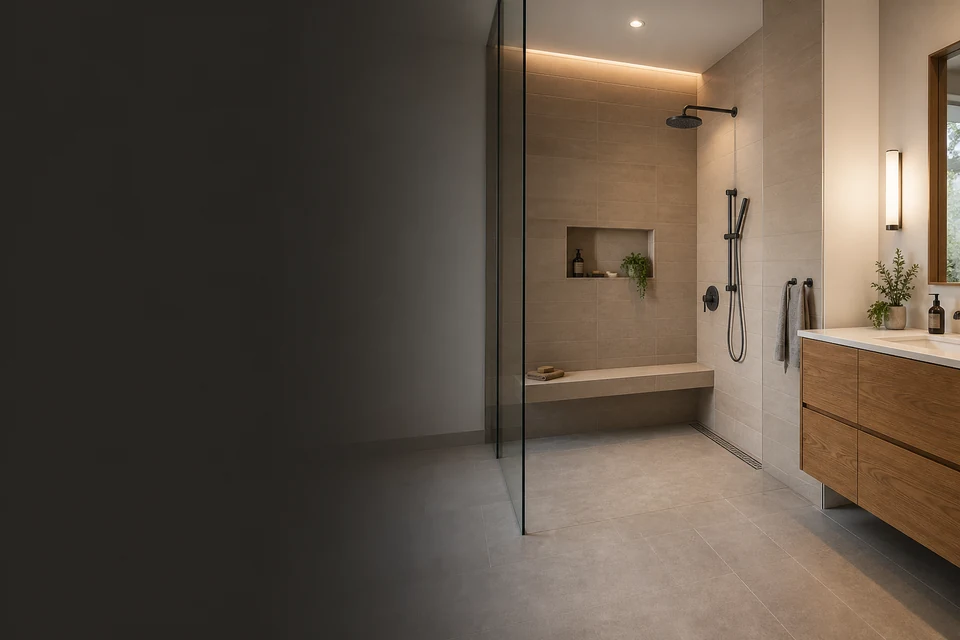
Start with the room rather than a trend label
Current bathroom images often show warm neutrals, softly varied surfaces, larger formats and fewer abrupt material changes. Those ideas can be useful, but they should not be copied without the room. A compact condominium bathroom, an older house and a new ensuite present different light, access, storage and transition questions.
Choose the direction after considering who uses the room, how often it is cleaned, the available natural light and which surfaces need grip. A material that photographs well in a dry showroom may read differently under bathroom lighting or when repeated across several walls.
Warm neutrals are replacing stark contrast
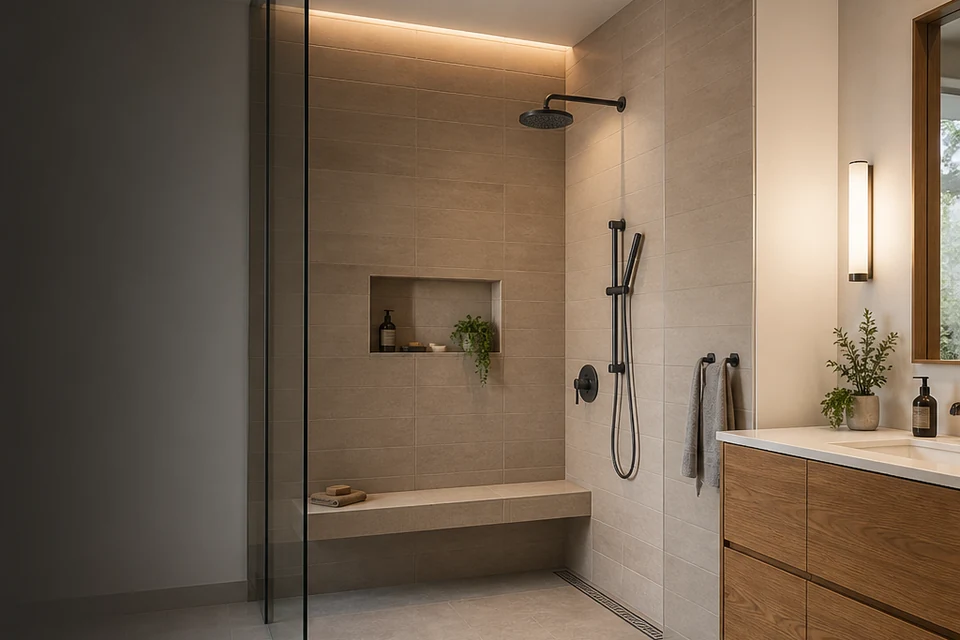
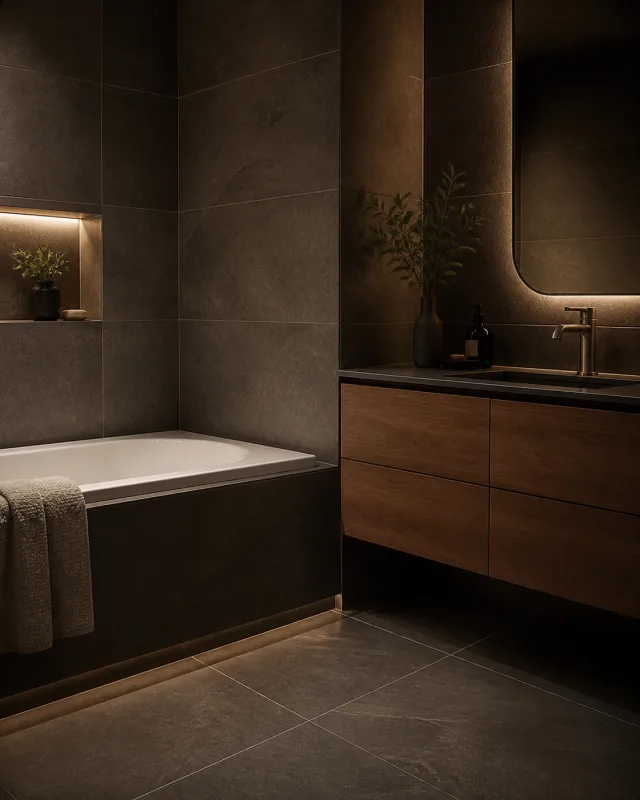
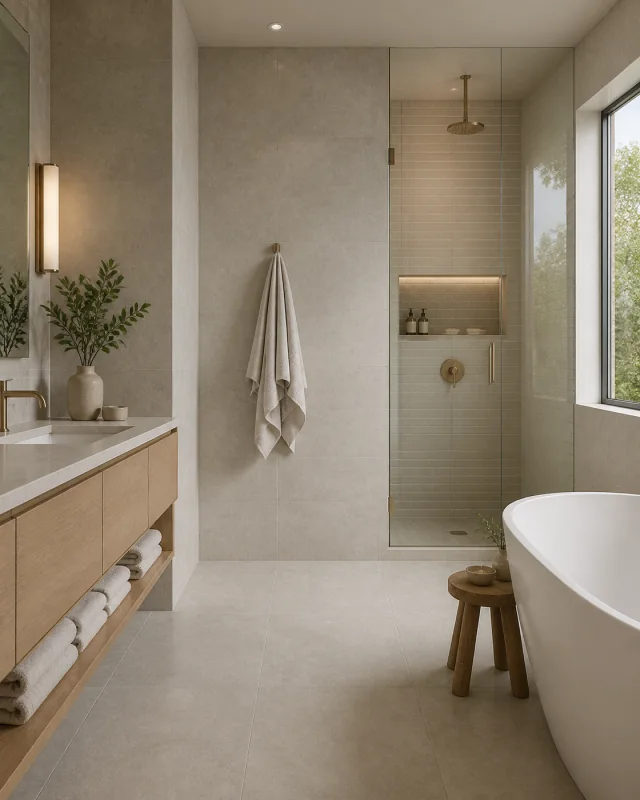
Ivory, sand, mushroom, clay and warm grey create a quieter base than a strong black-and-white scheme. They can work with wood vanities, brushed metal and painted cabinetry without making every component compete. Subtle variation also helps a larger tiled area feel less flat.
The practical decision is grout contrast. A close grout colour keeps the surface continuous, while a darker or lighter joint makes the grid more visible. Test the pairing with an actual tile and grout sample. Screens and showroom boards do not reliably show undertone under the room's lighting.
Texture is moving from decoration to focal surface
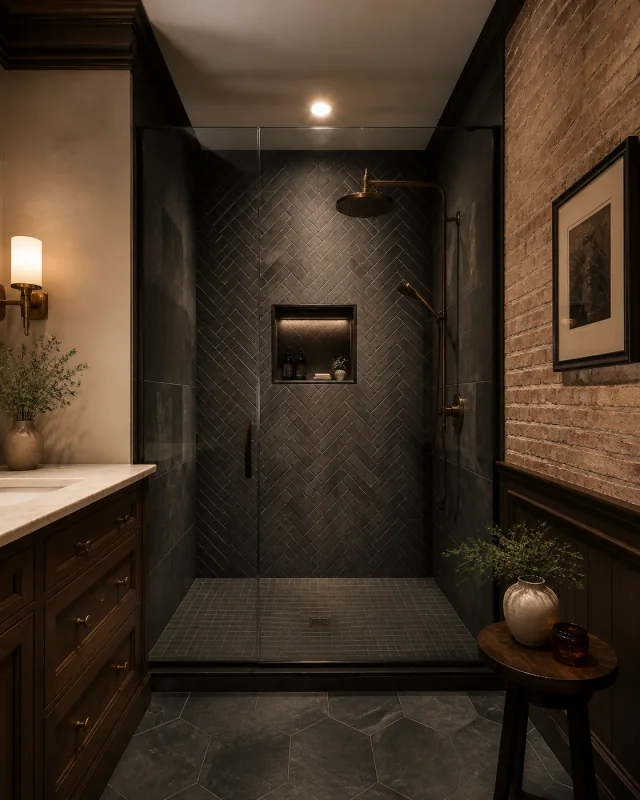
Fluted, ribbed, handmade-look and lightly relief-patterned tiles can add depth without introducing a separate colour. They are often most effective on a selected dry wall or vanity backdrop, where light can reveal the surface. Used everywhere, the same texture may add cleaning work and complicate corners, fixtures and glass lines.
Check how a textured tile ends. Trim availability, cut edges and outside corners can determine whether the detail looks intentional. In a wet area, confirm the product's suitability and cleaning guidance rather than assuming that a wall label covers every shower location.
Large formats can calm a room, with planning attached
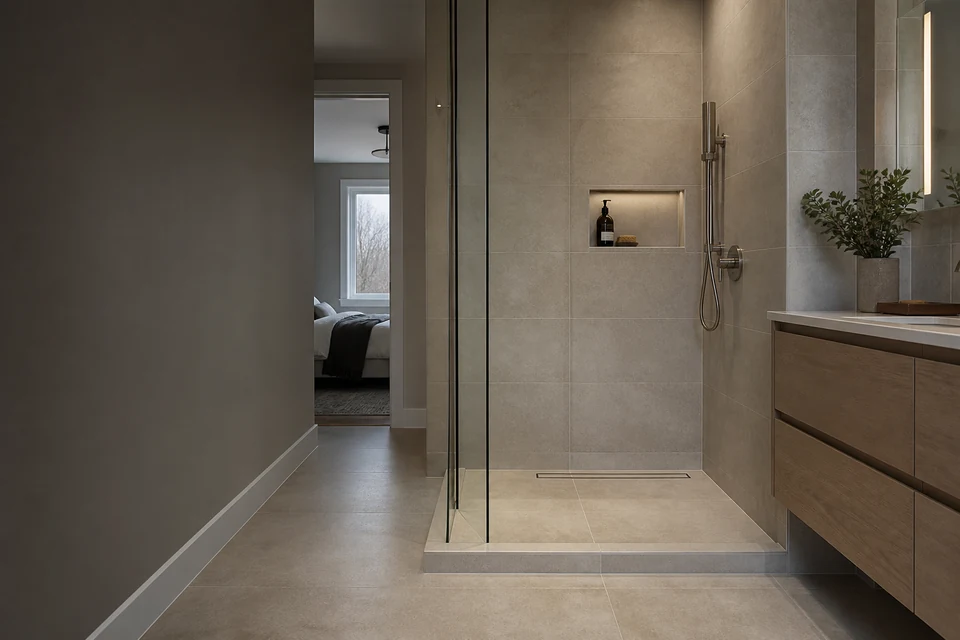
Larger porcelain formats reduce the number of grout lines and can create a broad, continuous surface. They also make the base, access route, cut plan and handling more important. A piece that fits the drawing may not fit through a stairwell, elevator or bathroom doorway without a different installation sequence.
Large tile does not remove layout decisions. Joints still need to respond to drains, niches, benches, plumbing and room boundaries. Shower floors may require a different size or cut approach to follow drainage. Treat the floor, walls and transitions as connected surfaces rather than forcing one format into every location.
- Confirm access and handling before ordering oversized pieces.
- Check the base and planned cut locations under the room lighting.
- Use a floor format and finish suited to drainage and underfoot needs.
- Coordinate grout, sealant and edge details with the overall palette.
A lasting bathroom combines one main idea with quiet details
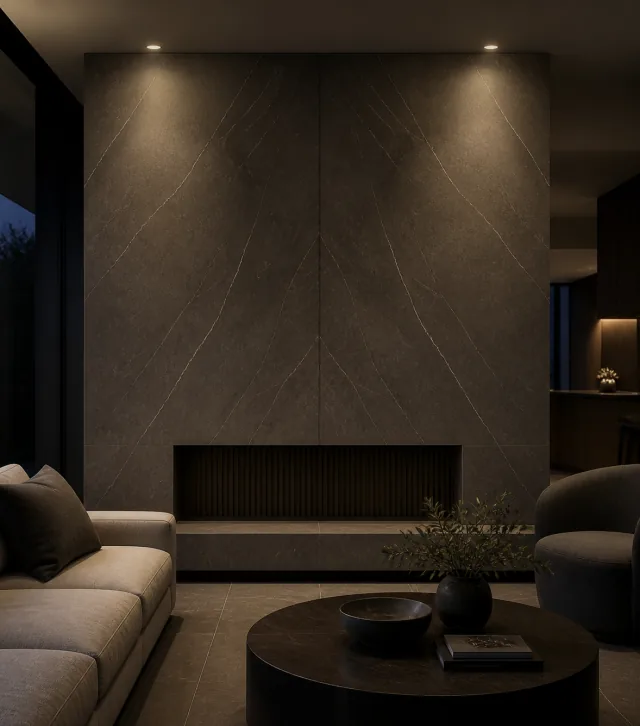
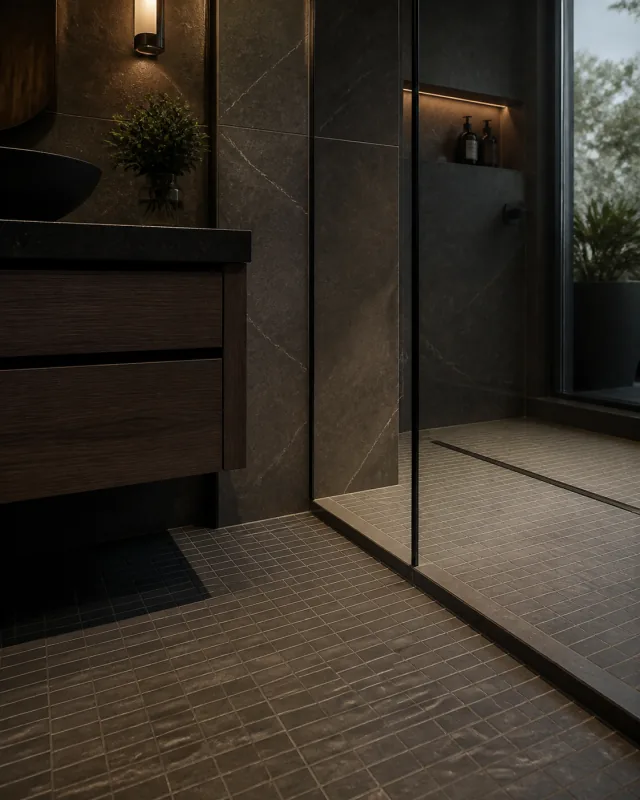
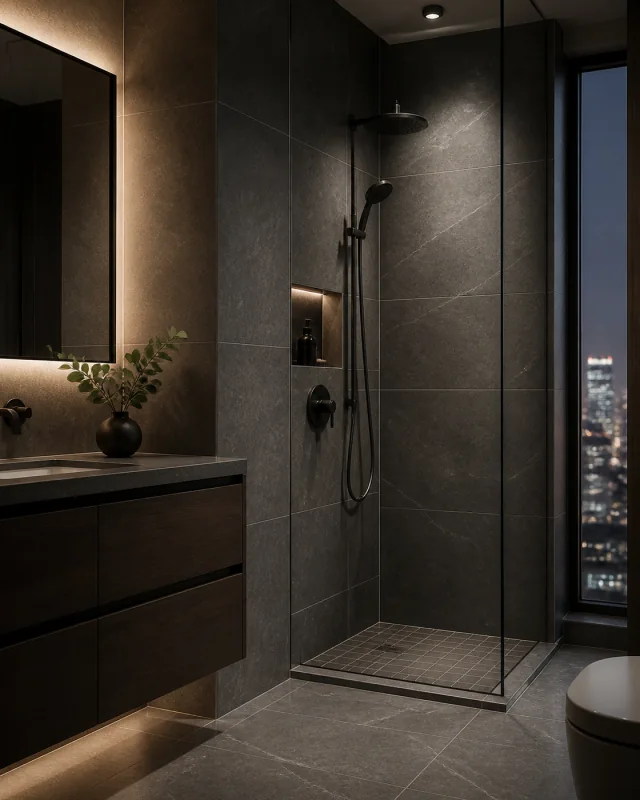
The most useful 2026 direction is restraint: select one leading material or layout idea, then let supporting surfaces make it easier to live with. A veined feature wall can sit beside quieter field tile. A small-format floor can provide grip and scale while the walls remain calm.
Before ordering, view samples beside the vanity, paint, lighting and metal finishes. Confirm niche and edge pieces at the same time. The result should suit the room after the trend images move on, with a layout and maintenance plan that work for the household.
Common questions
Questions related to this guide.
What bathroom tile colours are current in 2026?
Warm neutrals, muted earth tones and softly varied stone looks are common directions. The better choice depends on the room light, vanity, paint, fixtures and how much contrast you want the grout grid to show.
Are large tiles a good choice for a small bathroom?
They can make a compact room feel calmer, but access, base condition, cut locations, drains and fixtures still decide whether the format works. A measured layout is more useful than a size rule.
Can textured tile be used inside a shower?
Use the manufacturer's stated application and care guidance for the exact product. Texture can affect cleaning, edge treatment and fittings, so confirm those details before using it across a wet area.
Should the same tile cover the bathroom floor and shower?
It can, if the product, finish, drainage layout and underfoot characteristics suit both locations. Many rooms use related materials or colours while changing format or finish where the shower floor needs a different approach.